
In the 1950s, a trucking entrepreneur named Malcolm McLean had an idea that would reshape the global economy. He wanted to put cargo in standardised steel boxes and load them directly onto ships — skipping the dockworkers who spent days loading freight by hand. The unions saw it coming and fought it with everything they had. They were right to be worried. But they were wrong about what happened next.
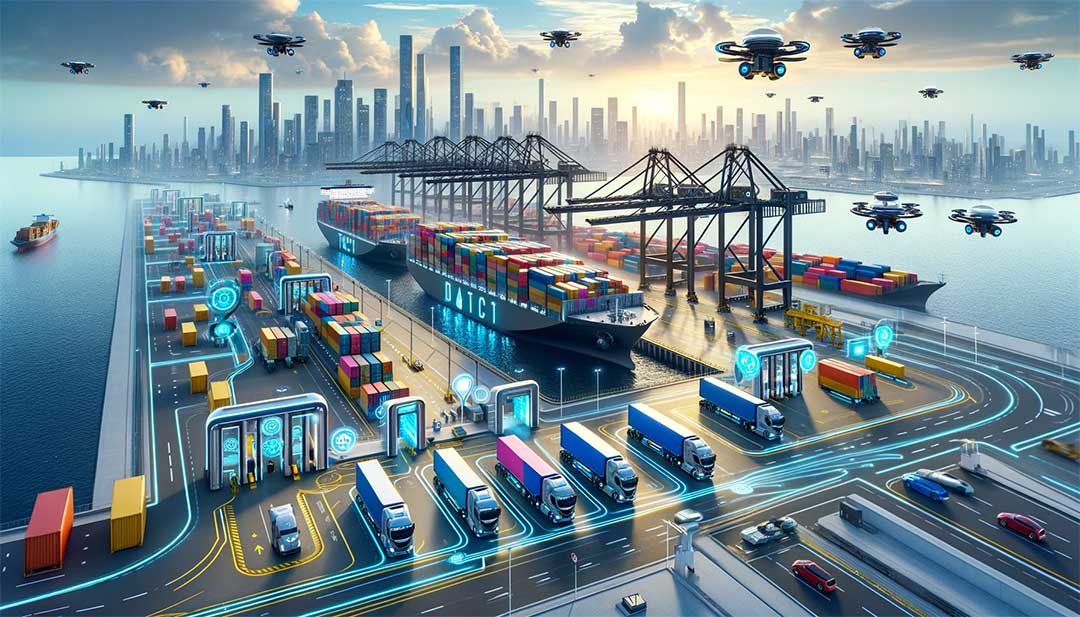
The Box That Changed Everything
Before the shipping container, international cargo was "break-bulk" — loaded piece by piece by gangs of longshoremen. A single ship could take a week to unload. It was backbreaking, dangerous work, but it employed tens of thousands of men in every major port city. The waterfront was its own economy: stevedores, checkers, coopers, cargo handlers, and the pubs and businesses that served them.
The International Longshoremen's Association and its equivalents around the world saw McLean's container as an existential threat. If one crane operator could do the work of twenty men, what happened to the other nineteen? They negotiated guaranteed income packages, staged strikes, and demanded protections. Some ports resisted containerisation for years.
They were right about the disruption. Port employment in cities like New York, London, and Sydney collapsed. Entire waterfront communities hollowed out. The old way of working was gone within a decade. The human cost was real, and it fell hardest on the people least equipped to adapt.
What Nobody Predicted
Here's what the unions — and almost everyone else — got wrong. They assumed the total amount of global trade was fixed. If you made shipping cheaper, you'd move the same goods with fewer people. End of story.
But that's not what happened. Shipping costs dropped by over 90%. And when you reduce the cost of moving goods by that much, you don't just move the same goods cheaper — you create entirely new trade that couldn't have existed before. Suddenly it made economic sense to manufacture in one country, assemble in another, and sell in a third. Products that were never worth exporting became viable. Supply chains that spanned oceans became standard.
World trade didn't just grow — it exploded. Factories, warehouses, distribution centres, trucking companies, logistics firms, customs brokers, freight forwarders, supply chain analysts, procurement managers — millions of jobs emerged in industries that only existed because the container made them possible.
The port of Los Angeles today employs far fewer dockworkers per tonne than the 1950s. But the total ecosystem of jobs connected to that port — from the truck drivers hauling containers inland to the warehouse workers sorting goods to the delivery drivers running the last mile — dwarfs anything that existed before containerisation.
The AI Parallel
The fear around AI runs almost exactly the same way. If AI can write code, handle customer service, draft legal documents, analyse data, and optimise delivery routes, what happens to the people doing those jobs? The instinct — just like the longshoremen's — is to protect what exists.
But the container lesson suggests something different happens when you dramatically reduce the cost and friction of a productive activity. You don't just do the same amount of it cheaper — you unlock demand that couldn't exist before.
Small businesses that could never afford a legal team can now access legal analysis. A one-person delivery company can optimise routes like a major logistics firm. A sole trader can produce marketing that previously required an agency. A startup can build software that once needed a team of ten. The barrier to entry collapses, and the total volume of work expands because more people can participate in activities that were previously locked behind cost barriers.
Think about what happened when desktop publishing replaced typesetters. The number of typesetters dropped — but the total number of people producing printed materials exploded. Newsletters, brochures, self-published books, marketing materials. The same thing happened when digital cameras replaced film processing labs. Fewer lab technicians, but millions more photographers, content creators, and visual marketers.
What This Means for Delivery Drivers
This pattern is already playing out in logistics. Route optimisation tools powered by algorithms — like the one we build at Routed — don't replace delivery drivers. They make each driver dramatically more productive. A driver who can complete 30% more stops in a day isn't redundant — they're more valuable. And because delivery becomes cheaper and more efficient, more businesses can afford to offer delivery, which creates more demand for drivers.
The rise of e-commerce is the clearest example. Twenty years ago, most retail goods were picked up in person. The shift to online ordering has created hundreds of thousands of delivery driver jobs that didn't exist before — not despite technology, but because of it. Every efficiency gain in routing, scanning, tracking, and logistics has made delivery cheaper, which has made more delivery viable, which has created more work.
The jobs that disappear tend to be narrowly repetitive. The jobs that appear tend to be broader, more adaptive, and more human — managing exceptions, building relationships, handling the situations that automation can't touch. Just as containerisation created the logistics coordinator, the supply chain analyst, and the global procurement manager, AI will create roles we can't name yet, built around capabilities we're only beginning to understand.
The Transition Is Real
None of this means the transition is painless. The longshoremen who lost their jobs in the 1960s didn't care that millions of new logistics jobs would exist in 2025. The pain was immediate and personal. The same will be true for some workers displaced by AI. That part of the story matters, and it deserves honest attention — not dismissal.
But the historical pattern is clear and consistent across every major technological disruption: when you make productive work dramatically cheaper, you get more of it, not less. The total number of jobs grows. The nature of the jobs changes. And the economy that emerges on the other side is larger, more diverse, and more capable than the one that came before.
Malcolm McLean's steel box didn't shrink the world economy. It made it bigger. AI will do the same — not by replacing human work, but by making it so much more accessible that entirely new categories of work become possible. The nineteen dockworkers lost their jobs. But a million other people got ones that never existed before.